On Late September
The week the bays empty, the water still warm, and the light shifts. The unsung secret of the Turkish coast.
By the middle of September the coast turns. Not in the dramatic way of autumn arriving - the water stays warm into November some years, and the days stay long enough - but in the slower way of the season starting to wind down. The schoolchildren return to Bodrum and Marmaris. The cars thin out on the coastal roads. The yachts that crowded Yalıkavak through August move on toward Greece or back to base. By the third week of September, you can anchor in bays that were full a fortnight earlier and find yourself the only boat.
This is the part of the season we recommend most often. Not because it's a secret in the way these things sometimes are - anyone who has spent enough time on the Turkish coast knows it - but because most charterers don't get the choice. They book around school holidays in June or August, when the children are free and the prices are highest, and they take the coast as it comes during those weeks. The coast in late September is genuinely a different place. Quieter, warmer in feeling if not always in temperature, and lit by light that has started to change.
The water is the simplest part to explain. The Aegean and Mediterranean both hold heat well - slower than air to warm in spring, slower to cool in autumn. By late September the surface has been warming for four months. It's at its peak, somewhere around 24 degrees on most parts of the coast, sometimes warmer in sheltered bays. Long swims in late September feel different from long swims in May - there's no shock to the body, no slow ten-minute adjustment. You're in the water and you stay in it. The captain will tell you that anchorages south of Datça often hold a degree or two warmer than further north; this is one of the small operational truths of late-season charters.
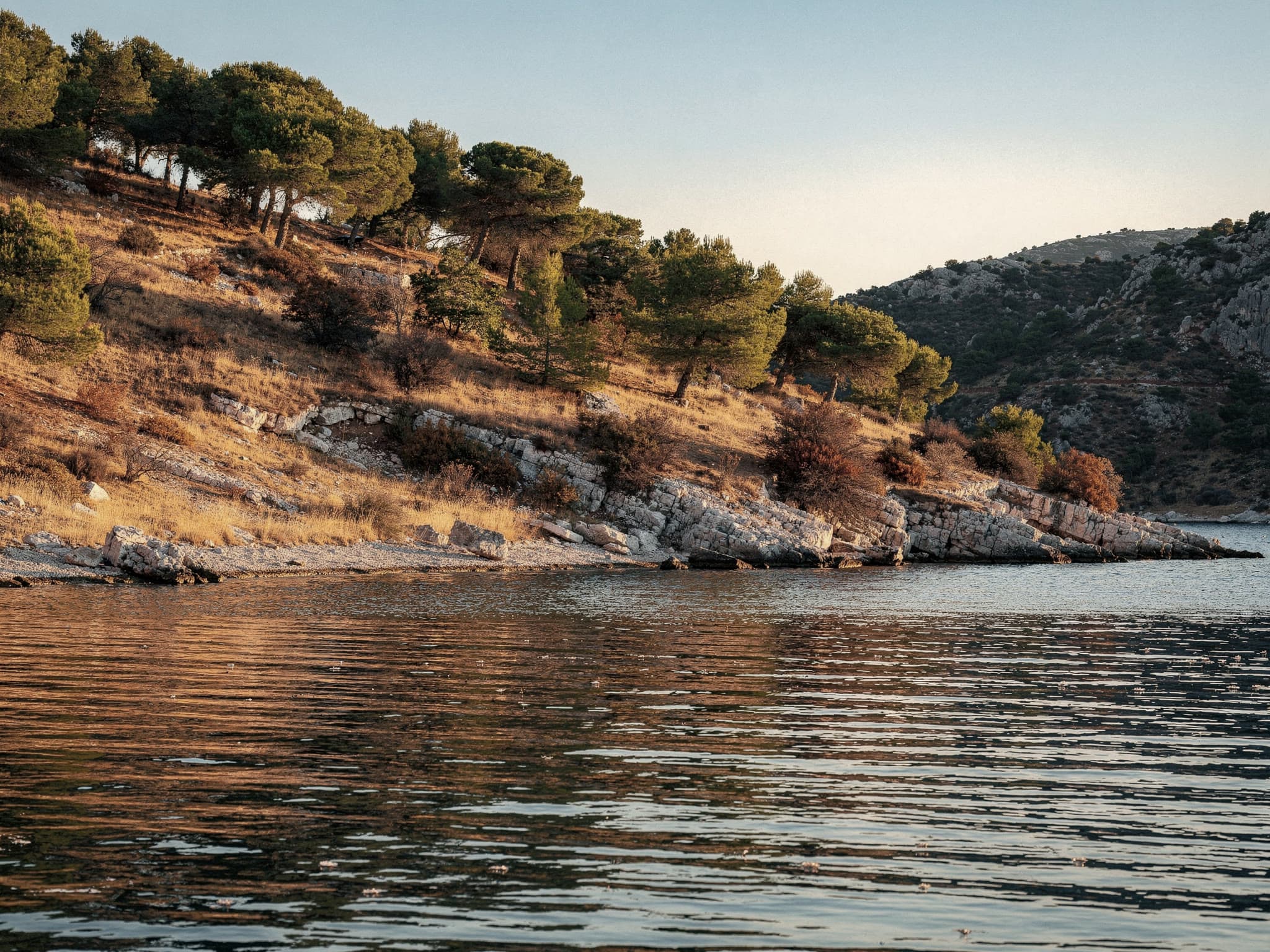
The light is harder to describe. Through July and August, the sun is high and the light is hard. Shadows are short. Water surfaces glitter rather than reflect. The pine slopes flatten in midday glare. By the second half of September, the sun's angle has dropped enough that you start to see the coast properly again. Mornings come in lower, warmer, slower. Late afternoons stretch into proper golden hours that last forty minutes rather than ten. The pine canopies catch highlights and shadows in a way they don't in high summer. Water surfaces reflect rather than glitter. None of this matters in any practical sense - you can have a wonderful charter in August - but it matters if you care about how a place looks. Photographers come to the Turkish coast in late September for exactly this reason.
The bays empty, and this is what most charterers notice first. The Gulf of Gökova in late August has yachts in every meaningful anchorage, sometimes thirty or forty boats in a single bay. By late September, the same bays might hold three or four. Some bays we recommend stop appearing in mainstream charter brochures by mid-September because the operators assume nobody's still looking. The captain knows which ones. There are sheltered coves along the Bozburun peninsula that fill in August and stand effectively empty by the third week of September. Mediterranean charterers tend to know this; British and American charterers often don't.
The temperatures stay comfortable. The air is warm through most of September - usually in the high twenties during the day, sometimes warmer in sheltered spots. The wind can pick up in the second half of the month, especially in the gulfs of Gökova and Hisarönü, which makes the sailing actively better for charters with proper sailing yachts. The evenings cool earlier than in August - you'll want something for the deck after dark - but the days are warm into the start of October most years.
The food shifts. The summer dishes carry through September - sea bass, lavraki, octopus, kebabs - but autumn brings figs at their best, the first pomegranates, the late tomatoes that taste like nothing else. Village markets are quieter than in August. The fishmongers are friendlier when they're not busy. The restaurants that are still open through September are mostly the good ones; the seasonal pop-ups have closed.
The one practical consideration is that some of the smaller villages have fewer services by late September. Quayside restaurants in Bozburun, Selimiye, and Söğüt are mostly open through early October but begin closing by mid-October. The captain will know what's open where. Provisioning happens out of Bodrum or Marmaris as it always does - these are working towns, open year-round.
The other consideration is weather. The season is winding down, and by the second half of October you can get the first proper storms of autumn. We don't recommend charters past the third week of October as a general rule - the weather becomes too unpredictable. Mid-September through early October is the proper window.
For groups that can take their charter outside the school summer, late September is the week we recommend more than any other. The water is at its warmest. The bays are mostly empty. The light is the best of the year. The captain has been on the coast all season and is at his most relaxed; the crew is at its sharpest after months of charters; the boats themselves are running at their best. The few weeks before the season closes are when the operation works hardest and most quietly to deliver the trip the buyer actually wanted.
Most repeat charterers know this. The bookings for late September go first, sometimes a year in advance. If you've decided on Turkey and you can choose your week, this is the one we'd point you at.