The Coast
Bodrum to Antalya, the islands between
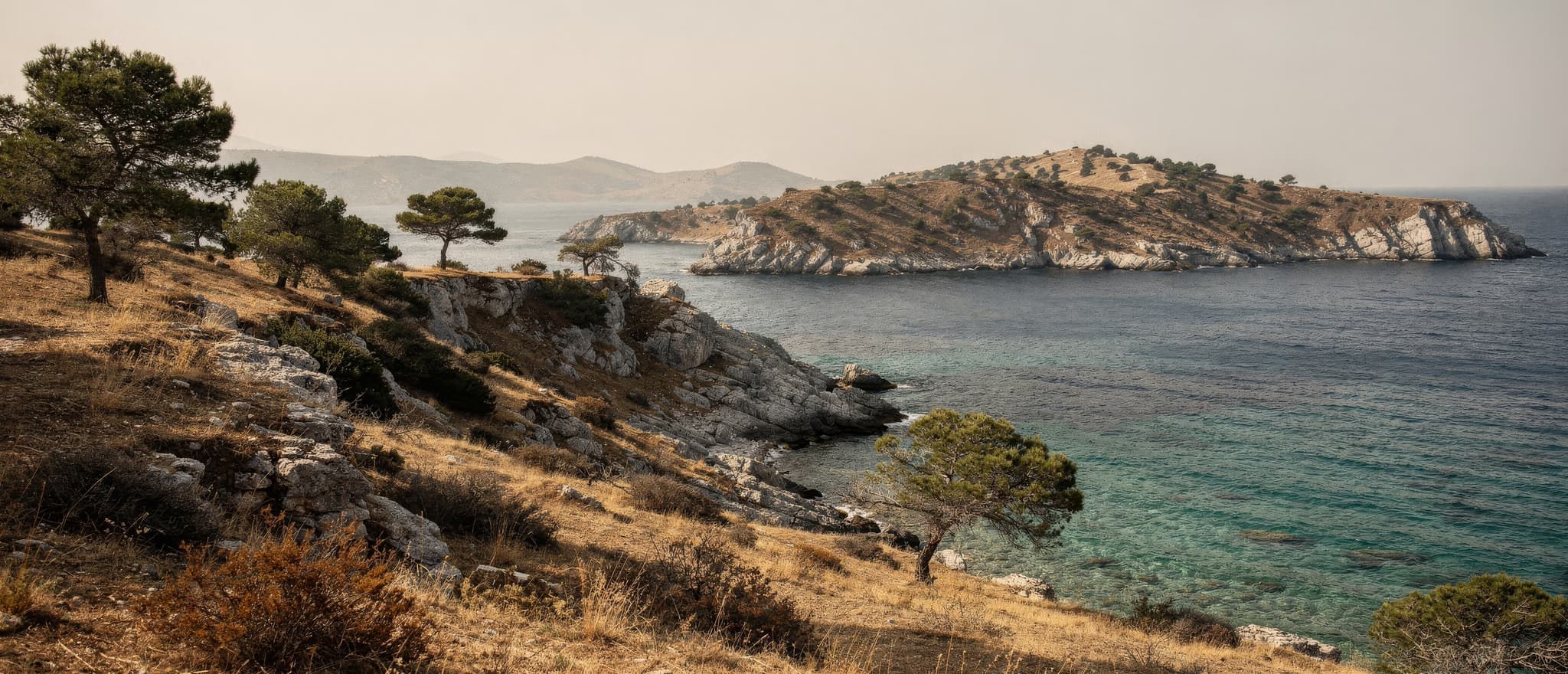
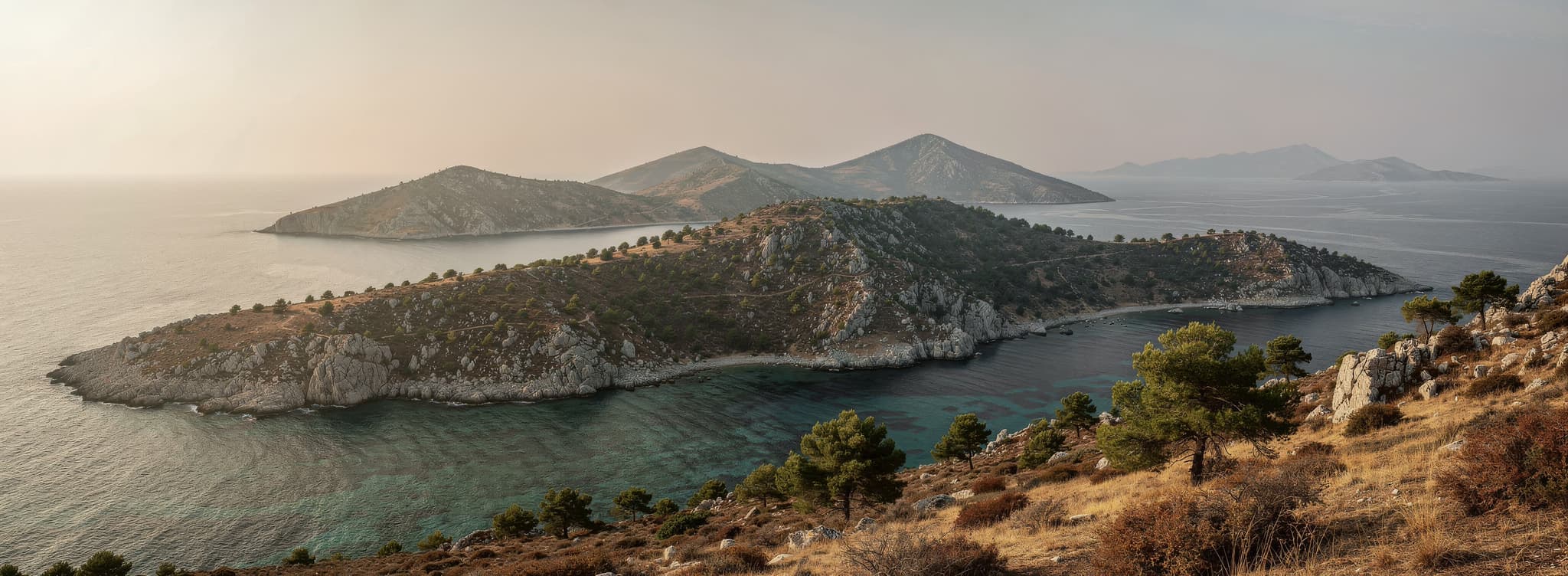
The Turquoise Coast runs from Bodrum to Antalya, a few hundred kilometres of pine-covered hills falling into water that's half-Mediterranean, half-Aegean. The villages are mostly small - fishermen and farmers, a few cafés, fruit sellers at the quay. Most charters in the Mediterranean tour a particular region for the week. Fewer make it to Turkey, and fewer still know it past Bodrum.
That's the coast we sail. The pine slopes, the limestone bluffs, the long anchorages where you hear only the wind. Some weeks include a crossing into the closest Greek islands - Symi for an evening of seafood in the harbour, Rhodes for a long lunch in the Old Town - but most weeks stay Turkish, working one of the gulfs from end to end.
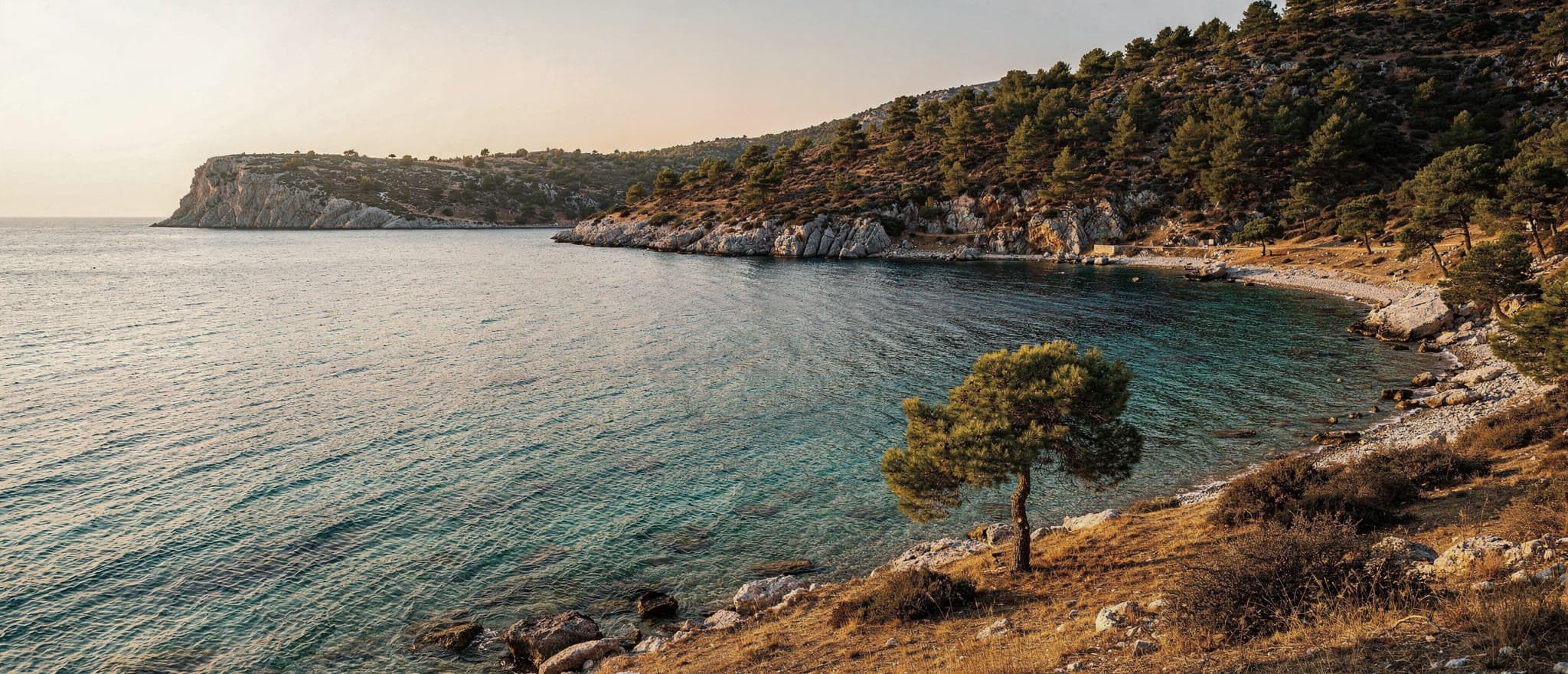
The coast begins at Bodrum. The town itself is lively and trendy in season - bars, restaurants, an old town worth walking through before you sail. Beynel for meze and kebab, Otantik Ocakbaşı for a mixed grill. Up the peninsula sits Yalıkavak, the coast's luxury yachting hub for over a decade now - a megayacht marina, designer hotels along the quay, a supermarket whose floors are marble. After that, the Gulf of Gökova: a vast inlet of pine and limestone with very few towns and even fewer restaurants. There are still plenty of yachts at anchor - this is the busiest stretch of Turkey's coast - but the bays themselves are large enough that you can find a quiet one. Most of a week from Bodrum is spent here. A bay to yourself by morning, a meal cooked on board, the boat tied to a pine tree on shore. Some charters round the Datça peninsula at the southern edge, but most don't - Datça itself is a stop, not a destination.
The Datça peninsula has the best wind on the coast. The ruins at Knidos sit at its western tip - an ancient Greek city built across two natural harbours, where the Aegean meets the Mediterranean. From Bodrum you can reach Datça in three hours of fair sailing if you want to; most weeks won't bother.
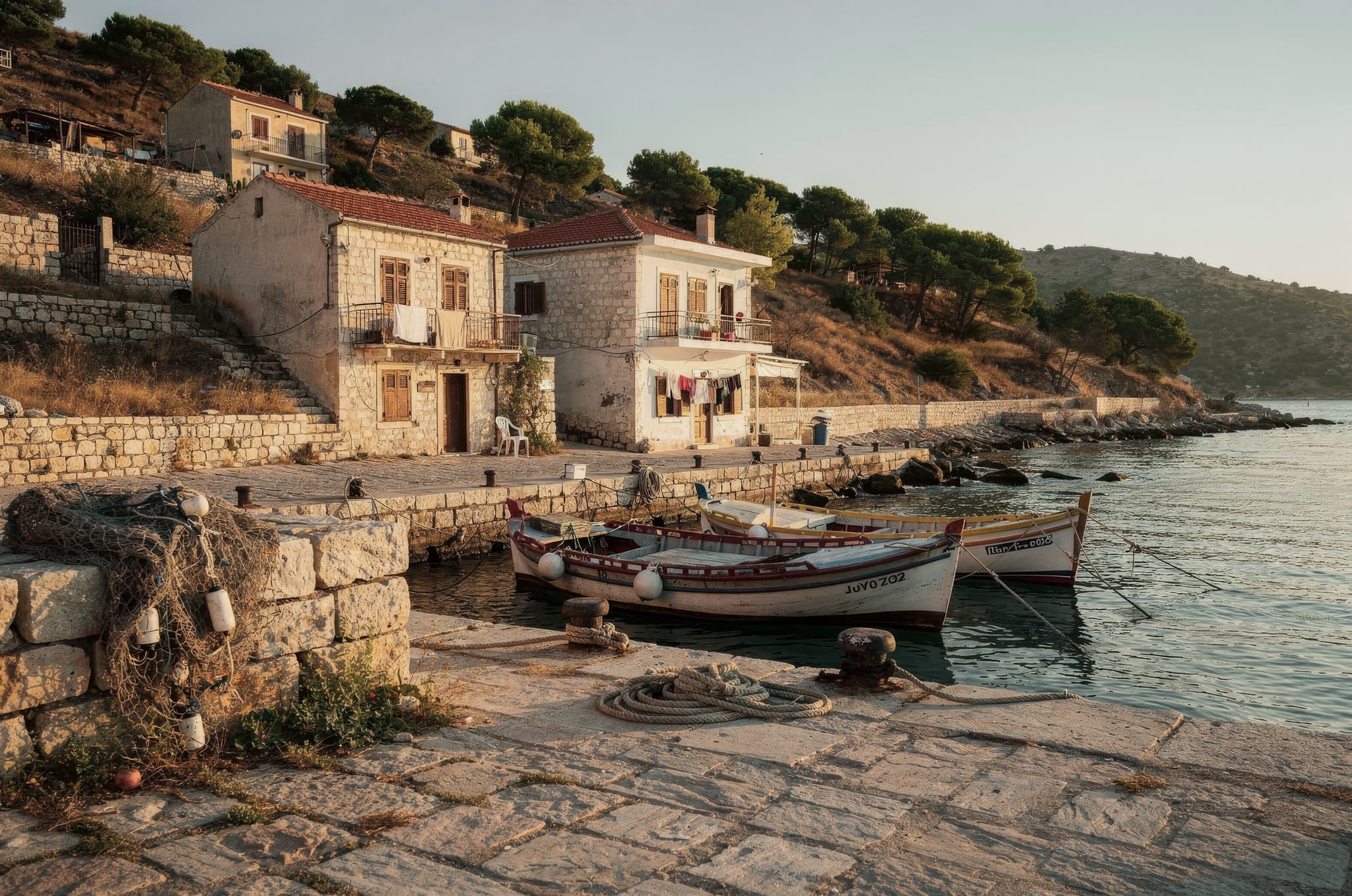
Marmaris and the Bozburun peninsula lie east of Datça, around the headland. This is gulet country. The yards along the Bozburun peninsula have been making them for generations, alongside the bigger boatyards at Bodrum. The peninsula itself is quiet, mostly working anchorages and small village ports. Selimiye and Söğüt are small village ports - fishing boats alongside the gulets at the quay, restaurants by the water. From Serçe the road runs out; the most hidden bays of the peninsula, Bozukkale and Dirsekbükü, are reached only by sea. From Marmaris you can work either the Gulf of Hisarönü to the west or the Gulf of Fethiye to the east - most charters from this base stay in one or the other.
Göcek is different. It's the coast's yachting hub: a sheltered marina, a row of waterfront restaurants, the Twelve Islands archipelago a short sail south. Superyachts gather here in season. Mezegi and Onno are good for an evening on shore; the bays around the Twelve Islands are where you anchor by day. From Göcek, most charters work the Gulf of Fethiye east or pick up the Kekova stretch.
The Kekova stretch sits east of Fethiye, running through Kalkan and Kaş toward Kekova bay itself. It's the quietest part of the coast - the fewest yachts, the most ancient sites, sunken Lycian ruins under clear water. The diving here is some of the best in Turkey. The villages along the way keep their old shape, white houses falling toward the water, small cafés and quiet streets. A week from Fethiye can take in the whole stretch comfortably.
The closest Greek islands sit just off the Turkish coast. Symi is a few hours from Marmaris - a small island with neoclassical houses banked up the harbour and seafood restaurants worth the crossing. Rhodes is further south but worth a long lunch in the Old Town, or an afternoon on its beaches. The islands have a different rhythm to the Turkish mainland - louder in places, more touristed in others - but most charters that include them come back richer for it.
The season runs roughly from April to October. April is hit and miss - the water still cold, the wind unpredictable, the days mostly fine but you can't quite count on it. By the end of May the coast settles. The air warms, the bays start to hold their summer feel, and the marinas begin filling without yet being crowded. Late May and the first weeks of June are some of the best weeks of the year: warm enough for long swims, quiet enough that you can pick your bays.
July and August are the busy months. The coast is alive - restaurants full, anchorages busy, music on the water at night. The temperatures sit above thirty most days, sometimes well above. If you want the atmosphere of a Turkish coast in full season, this is when. If you want to walk around towns in midday, it's when not to go. Prices in this stretch are at their highest.
September pulls everything back. The water still holds the summer's heat well into October, the air is warm, the wind eases. Crucially, the bays empty as European school terms restart. Late September into early October is one of the secrets of the coast - the conditions of high summer without the crowds. Repeat charterers often book this stretch first.
October starts to turn cold in the evenings, and the wind picks up. By November the season is done.
The right week depends on what kind of trip you want. Long swims and quiet bays - late May or late September. Atmosphere and full restaurants - high summer. The coast doesn't have a bad month between June and October; it has different ones.
A charter on the Turquoise Coast runs a week. Most yachts won't take a booking shorter than seven days, and longer charters happen but aren't the standard. Two weeks suits groups who want time to slow into the rhythm of the coast - or who want to combine two gulfs.
The mental model the family uses is straightforward: one gulf, one week. The coast is divided naturally into a few large gulfs, and each gulf is more than enough for seven days of proper exploration. From Bodrum, the week is the Gulf of Gökova. From Marmaris, it's the Gulf of Hisarönü or the Gulf of Fethiye. From Fethiye, it's the Gulf of Fethiye or the Kekova stretch east. The Kekova stretch isn't strictly a gulf - it's a long coastal run - but the principle holds: one region, properly explored, beats five regions glanced at from a moving boat.
The mistake most charterers make is trying to do too much. Faced with a coast hundreds of miles long and dozens of named anchorages, the instinct is to plan a week that touches everywhere. The result is a week mostly spent at sea - engines running, bays passed without stopping, the coast experienced through a porthole rather than at anchor. The captain's advice on this is worth listening to. A standard rhythm is one anchorage per day, with two or three nights in the bays the boat and the group like best.
Two weeks opens the coast properly - enough time for two gulfs, or one gulf plus a crossing to the closest Greek islands. From Marmaris you can work the Gulf of Hisarönü for a week and cross to Symi and Rhodes for the second. From Bodrum, two weeks gets you the Gulf of Gökova and lets you round Datça into the Gulf of Hisarönü.
The route is built around the group, not the other way around. Some weeks favour quiet bays; some favour villages and shore evenings. The brief from the buyer at the start matters more than the route on paper - the captain adjusts as the week goes.
The Turquoise Coast rewards charterers who want a coast more than a checklist. Pine on one shore, limestone on the other, the boat slowed to the pace of the place. The food is the best in the Mediterranean, the company is mostly local, and the bays empty enough that you'll find your own.
We've been working this coast for over fifteen years. The fleet is small and considered - gulets, motor-sailers, sailing yachts, all crewed properly. When you've decided on Turkey, we'd be glad to help you plan a week.